About the Project
Sustainable service delivery remains a daunting challenge in the water, sanitation, and hygiene (WASH) sector. Traditional efforts that have emphasized constructing WASH facilities and expanding service coverage have led to high rates of post-project failure.
While it is widely recognized that new approaches are needed to address long-term maintenance and sustainability of WASH services, there has been limited exploration of what approaches work, what benefit they bring to sustainability, and how they can be applied effectively.
LINC and a consortium of partners are breaking new ground in the USAID Sustainable WASH Systems (SWS) Learning Partnership, a $15.3 million activity being implemented from 2016 to 2021. The partnership seeks to generate and apply evidence on how systems approaches can improve the sustainability of WASH programs. This activity tests new ideas, approaches, and tools to overcome barriers to sustainability in Cambodia, Ethiopia, Kenya, and Uganda.
With the overall leadership of the University of Colorado Boulder , LINC is supporting three main activities:
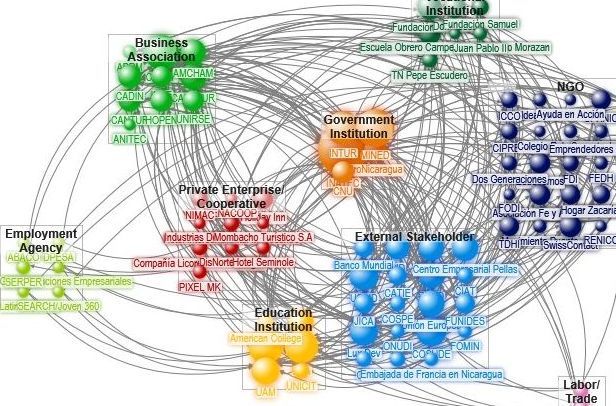
- In Ethiopia, LINC is working alongside partners IRC Netherlands and Tetra Tech to foster learning and collaboration among local stakeholders in the WASH sector. LINC is conducting a series of organizational network analyses to aid local stakeholders in designing and monitoring their initiatives. Additionally, we are applying network strengthening methodologies to support the health and resilience of local coalitions over time.
Read Our Research Products
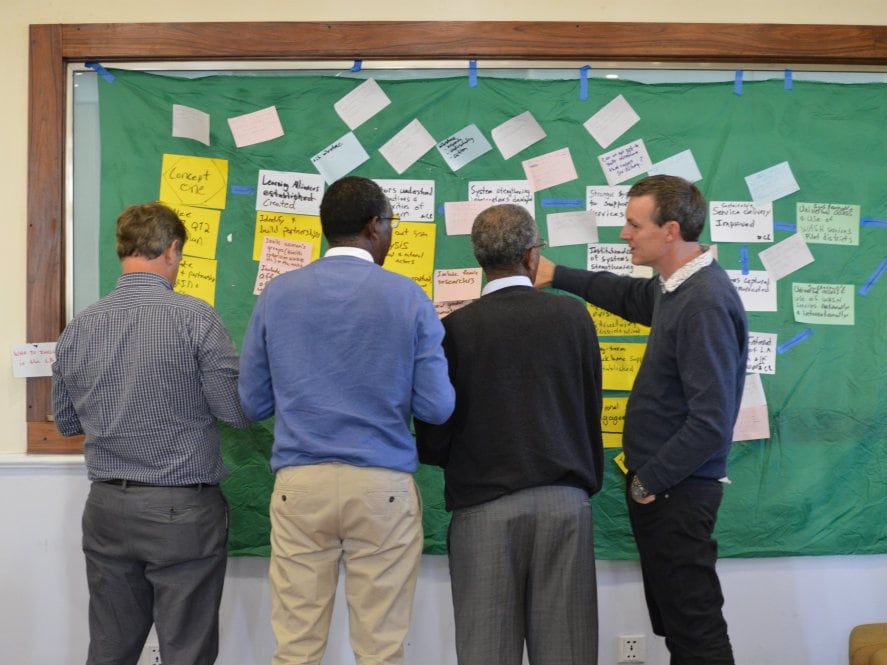
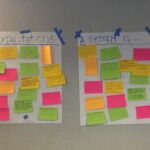
Consortium partners identify and map out issues related to sustainability of WASH services in Ethiopia
- In Cambodia, LINC worked with WaterSHED Asia to design a collective action approach with local stakeholders in support of the national rural water and sanitation strategy. Through a participatory process, we conducted an organizational network analysis (ONA) that generated common understanding, discussion, and coordinated actions in support of sector-wide goals.
- Across multiple countries, LINC is leading research on the application and use of network analysis to achieve goals in sustainable systems change. These efforts are capturing learning on how to best design and deploy network analyses in diverse settings.
Latest SWS News
Similar Projects