667 F Street NE, Washington, D.C., 20002
+1 202 640 5462

Research

About our Research, Assessment, and Evaluation Services

For over a decade, LINC has delivered rigorous, utilization focused research, assessment, and evaluation services across more than thirty countries, combining mixed methods designs with systems thinking and strong localization. In the past five years alone, we have conducted over twenty evaluations and fifty assessments in a range of sectors, including market systems, resilience, governance, food security, health, gender, youth, education, and environment. We mobilize mixed, locally led teams; tailor designs to the context; and keep decision-use at the center of our work.

Rigorous and mixed-method designs. We tailor methods to the decision at hand and blend qualitative depth with quantitative reach. Designs commonly combine KIIs/FGDs, community/household surveys, document review, and stakeholder workshops—plus systems tools when useful. In Tanzania (DCLI) we used outcome harvesting and ecosystem mapping with 45 KIIs to surface evidence of data‑use change; in Kenya (AVCD) we coupled household and market‑actor inquiry to test value‑chain effects; and in Ghana (MFA/GFRA) we paired performance reviews with 20+ data quality assessments (DQAs) to ensure indicator integrity.

Complex or insecure environments. We generate credible evidence where it’s hardest to work—fragile states and high‑violence settings—by pairing context analysis with practical safeguards and right‑sized tools. In Jamaica, our Positive Pathways/LPD evaluations engaged 131 community surveys, 60+ KIIs, and 18 FGDs across 12 hotspot communities, with trauma‑informed protocols. In Somalia (EAJ), we traced justice‑seeking pathways despite access constraints and security risks.

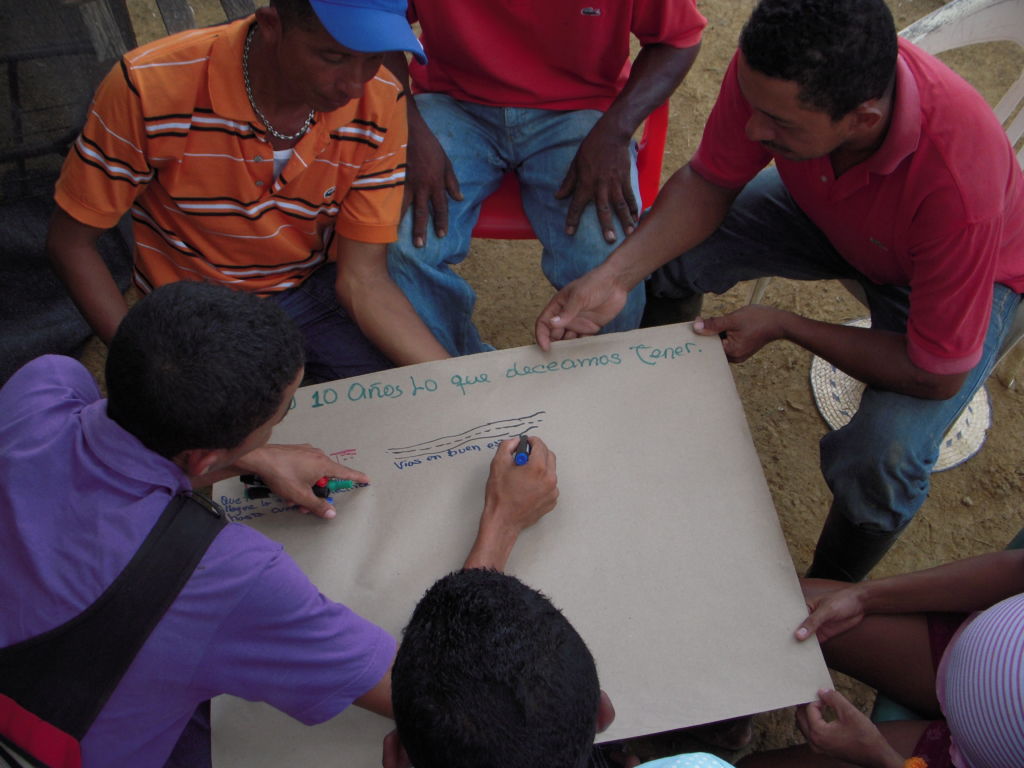
Research - DSCN1658

Rapid response and utilization. We field teams quickly for rapid studies and design for uptake from the start, co‑creating questions, facilitating sense‑making/after‑action sessions, and packaging results into briefs and decision notes that travel and get used.

Locally led and ethical practice. We staff locally led teams and partner with local institutions (e.g., universities such as Mzuzu University, Makerere University, JaRco Consulting, and regional research hubs), strengthening evaluation capacity while ensuring cultural and ethical fit.

Evaluations in Action

LINC led a multi-phase evaluation of the $12.7 million T-FAST trade facilitation project in Paraguay, which strengthened implementation of the WTO Trade Facilitation Agreement by streamlining agricultural import and export processes. Working with local partner Instituto Desarrollo, LINC employed a mixed-methods design that combined stakeholder surveys, key informant interviews, and transactional data analysis using Paraguay’s SOFIA customs system. The evaluation traced measurable reductions in clearance times and trade costs, and identified reforms most likely to sustain gains—such as institutionalized data sharing across border agencies and strengthened roles for the National Trade Facilitation Committee. Findings informed final recommendations adopted by USDA and the Government of Paraguay to enhance transparency and efficiency in agricultural trade.

For the Millennium Challenge Corporation, LINC conducted an independent evaluation of the DCLI initiative, which aimed to increase the use of data for local decision-making in Tanzania. Using a systems-oriented mixed-methods design, the team combined outcome harvesting, network and ecosystem mapping, and 45 key informant interviews with government, NGOs, and data innovators. The evaluation traced how data innovations spread across sectors, identifying pathways from grant-funded pilots to institutional data-use practices. LINC’s findings showed that targeted investments in data literacy, peer learning, and cross-sector collaboration produced durable shifts in how local actors generate and apply evidence—insights that informed MCC’s subsequent programming on digital transformation and data governance.

In Cambodia, LINC designed and conducted a mixed-methods final performance evaluation of the Cambodia Green Futures project, a pilot initiative promoting environmentally responsible behaviors through Social and Behavior Change Communication (SBCC). The evaluation assessed how effectively CGFA’s SBCC approaches influenced awareness and behavioral norms around three conservation themes—reducing bushmeat consumption, curbing demand for luxury wood furniture, and reducing littering. Using a combination of document review, key informant interviews, focus group discussions, and a targeted social-media survey, LINC applied a rapid qualitative analytical matrix to synthesize findings across respondent groups. The evaluation found that CGFA exceeded its performance targets, particularly in youth engagement and policy dialogues, while identifying evidence gaps around actual behavior change measurement and SBCC targeting of consumer segments

Assessments in Action

LINC conducted a national assessment of Ghana’s digital ecosystem and media landscape to understand how citizens access, produce, and trust information in an increasingly online environment. The study combined a comprehensive media scan and social network mapping with over 400 radio listener and social media user surveys, in-depth interviews with journalists, regulators, and digital entrepreneurs, and content analysis of leading radio programs and online platforms. This mixed-methods approach revealed both the resilience of radio as a trusted source and growing vulnerabilities tied to digital misinformation, gendered access gaps, and regional disparities. Conducted for USAID, the assessment provided a data-driven foundation for strengthening digital inclusion and governance in Ghana’s evolving information space. Read more

Working in partnership with the Foundation Center and Peace Direct, LINC has conducted extensive research on the attributes and drivers of financial sustainability for local organizations in diverse locations throughout the developing world over the three year period. Read our research and view funding network maps on the Facilitating Financial Sustainability research site. Read more

LINC conducted a national Resilience Evidence Gap Analysis in Ethiopia to examine the strength, breadth, and consistency of existing evidence on what drives resilience in Ethiopia. Reviewing 249 USAID-funded studies and evaluations, the team used contribution analysis, systematic qualitative coding in NVivo, and a strength-of-evidence framework to assess where claims about “what works” are well-supported—and where evidence remains thin. The review found strong documentation around social capital, early action, and asset building, but limited or inconsistent evidence on digital services, climate adaptation, and sequencing of humanitarian-development-peace interventions. The analysis now anchors Ethiopia’s resilience learning agenda and guides future research investment and policy focus. Read more

As part of the five-year, Sustainable WASH Systems initiative, LINC led research and learning on the application of network analysis and collective action approaches to complex water and sanitation systems. This included research and learning documentation from our activities in Ethiopia and Cambodia. Read more